1-888-910-7366




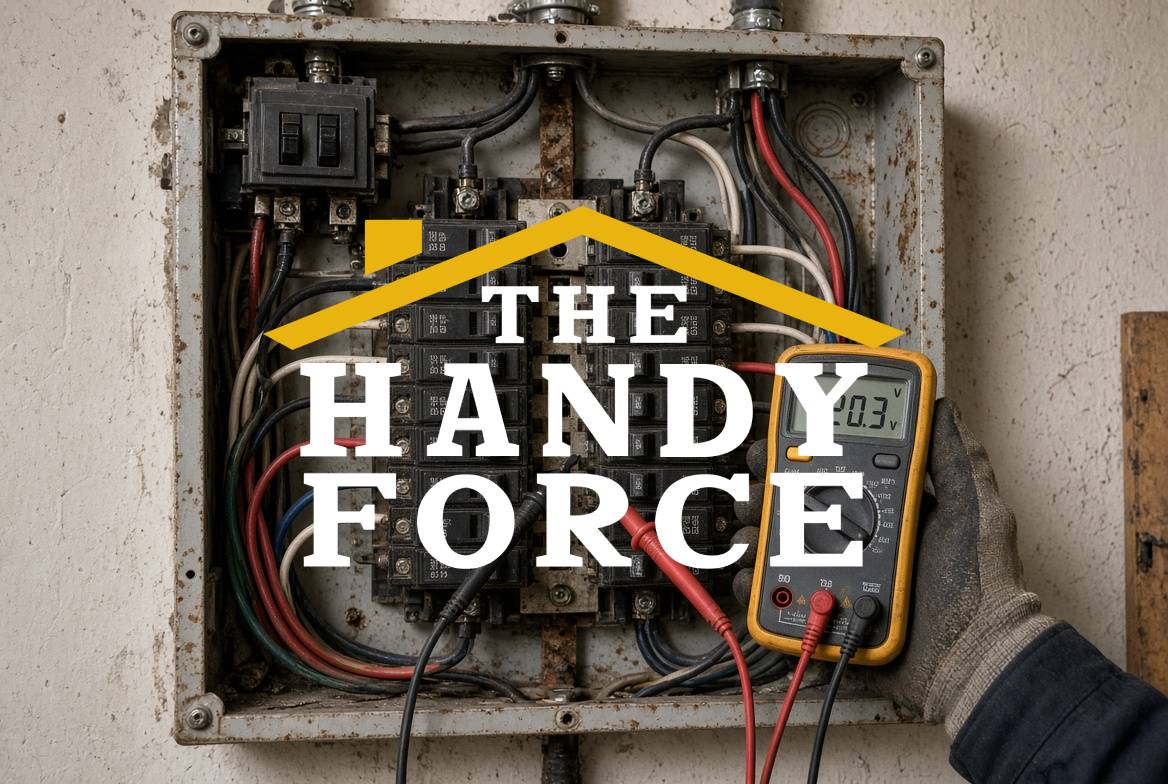
If you own a house in North York that was built between about 1965 and 1975, there is a real chance the branch circuits behind your walls are aluminum rather than copper. It was used in hundreds of thousands of North American homes during that decade, for a simple reason: copper prices spiked, aluminum was cheap, and the code allowed it. Willowdale, Bayview Village, Newtonbrook and the Don Mills fringe were all being built out at exactly the wrong moment.
This is the single biggest difference between the houses we work on in East York and the houses we work on in North York. East York is knob-and-tube country, because most of it went up before 1950. North York is aluminum country. Different decade, different problem, and a lot of homeowners have never been told which one they have.
How to Tell What You Have
Go to your panel and look at the cable sheathing where it enters. Aluminum branch wiring from this era is usually marked ALUMINUM or AL along the outer jacket, stamped every foot or so. You can also pull the cover off a receptacle, though we would rather you did not go poking around a live box. The conductor itself is silver rather than the orange-pink of copper.
One important distinction. Large-gauge aluminum feeding your main service from the street, or feeding a range or dryer circuit, is completely normal and is still installed today. It is fine. What we are talking about is small-gauge aluminum used for ordinary 15 and 20 amp branch circuits: your lights, your outlets, the plug your kettle is in. That is the material with the track record.
Why It Matters
Aluminum is not dangerous in itself. The problem is what happens at the connections. Aluminum expands and contracts more than copper as it heats and cools, it is softer, and it forms an oxide layer that resists current. Over decades of daily heating cycles, a screw terminal that was tight in 1970 works itself loose. A loose connection arcs. An arc behind a wall plate is how fires start.
So the failure point is almost never the wire in the middle of the run. It is the terminations: outlets, switches, light fixtures, wire nuts in junction boxes, and the panel itself. That is genuinely good news, because it means the fix does not always mean tearing your house apart.
The Warning Signs
Call someone if you notice any of these:
- Cover plates that are warm to the touch
- A faint smell of hot plastic near an outlet or switch
- Lights that flicker on a circuit for no obvious reason
- Outlets that have stopped working with no tripped breaker
- Discoloured or scorched cover plates
Warm plates and burning smells are not a “book it for next month” situation. Turn the circuit off at the panel and get an electrician in.
What the Fixes Actually Are
Pigtailing With Approved Connectors
The standard remediation is to splice a short copper tail onto the aluminum conductor at every device, using a connector specifically approved for joining the two metals, then land the copper on the outlet or switch. Every device in the house gets done. This is the option most North York homeowners end up choosing, because it addresses the actual failure point without opening walls.
The critical word is approved. Ordinary wire nuts are not acceptable for this, and neither is twisting the two metals together and hoping. Done wrong, pigtailing creates exactly the problem it was supposed to solve.
CO/ALR Rated Devices
Outlets and switches rated CO/ALR are designed to take aluminum directly. They are a legitimate option but the range available is limited, and on a whole-house job most electricians prefer pigtailing because it lets you use any device you like afterwards.
Full Rewire
Replacing the branch wiring outright is the permanent answer. It is also the most disruptive and the most expensive, and it means opening walls and ceilings. It makes sense when you are already gutting, when the panel needs upgrading anyway, or when a house has enough other electrical problems that piecemeal repair stops being sensible. If you are planning a kitchen renovation or finishing a basement, that is the moment to deal with it, because the walls are open and the marginal cost drops sharply.
The Insurance Question
This catches people out. Some Ontario insurers will not write a new policy on a house with unremediated aluminum branch wiring, and some will write it but at a higher premium. Others will accept it with documentation that the connections have been properly remediated by a licensed electrician. If you are buying in Willowdale or Newtonbrook and the house is from this era, raise it with your broker before you firm up, not after.
Keep the ESA certificate. It is the document your insurer will ask for, and the document a buyer’s agent will ask for when you eventually sell.
Permits and the ESA
Electrical work in Ontario is governed by the Electrical Safety Authority, not by the City. Remediation work needs a notification filed and an inspection afterwards. Any licensed electrical contractor handles that as a matter of course, and you should be suspicious of anyone who offers to skip it to save you money. Our electrical team pulls the ESA permit on every job and leaves you with the certificate.
The Bottom Line
Aluminum branch wiring is not a reason to walk away from a house. It is a known problem with a known fix, and thousands of North York homes have already been through it. What you should not do is nothing. The connections degrade slowly and invisibly, and the first clear symptom is often heat.
If your house is from that decade and you have never had the wiring assessed, that assessment is worth booking before you spend money on anything cosmetic.
Ready to Talk?
We work across North York from our office on Wilson Ave, including Willowdale and Bayview Village. If you want a straight answer about what is behind your walls and what it would cost to deal with it, book a visit and we will tell you what we find.